

Why living on high alert has become our default setting
On 'hyperattention' and why your phone tricks your nervous system into thinking it's still in the wild

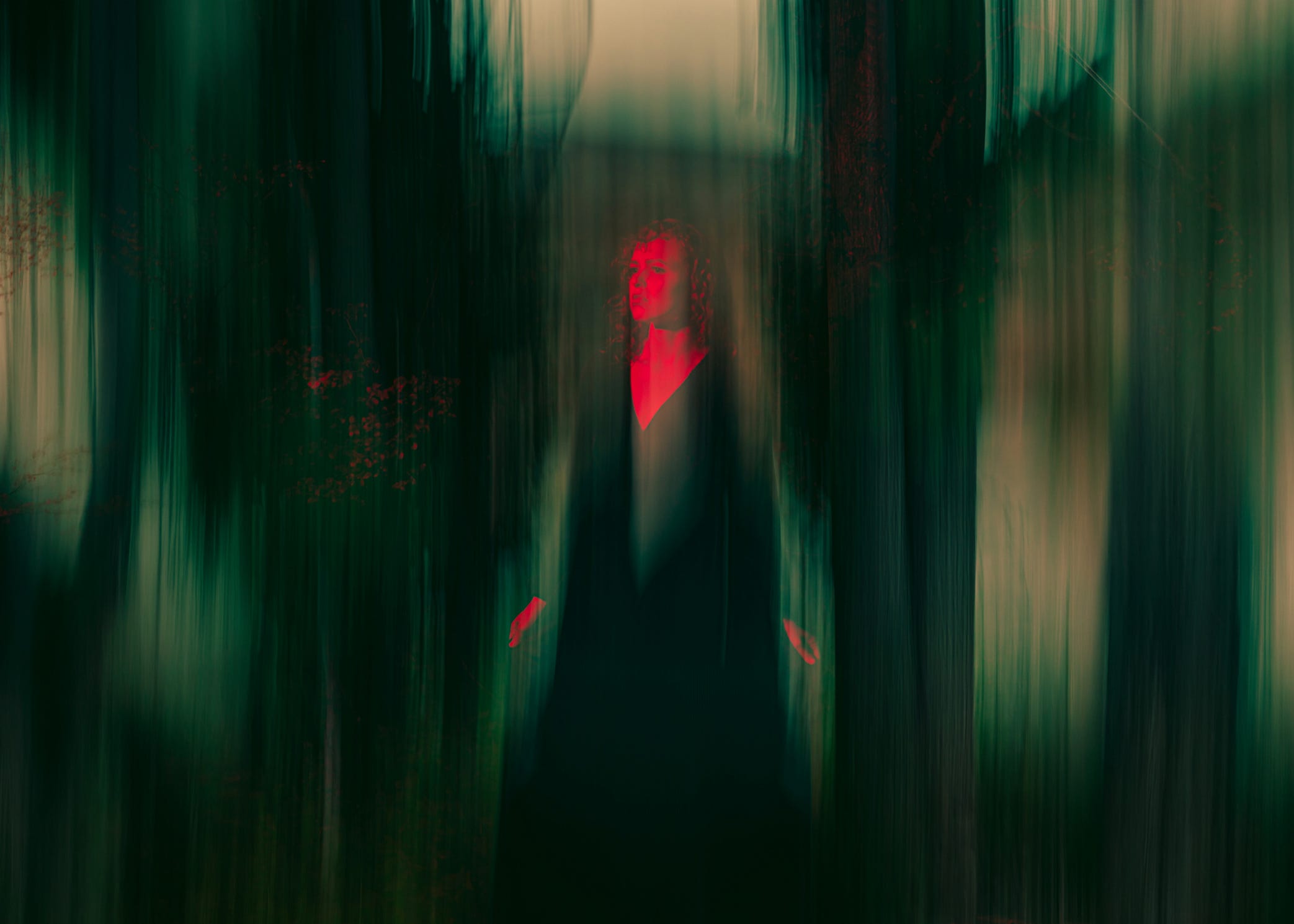
I wrote a book about the psychology underpinning tech dependence. Which means I’ve spent a lot of time researching why our social media habits mess with us so much.
Practically, that looked like a great deal of reading, interviewing and note-taking. But the sheer amount of information about why we’re experiencing so much collective turmoil right now felt dizzying, like looking down at the world below from a great height.
I did my very best to distill everything I found – the studies, the insights, the frameworks – into the most helpful guide when I wrote Screen Time. But no matter how simply it’s presented, I know suggesting you unpick years of tech habits that are so finely woven into every part of your life can seem like a task so monumental it borders on absurd.
To objectively see, understand and then change these ingrained behaviours can feel like a gross act of contortion. We are being asked to bend and twist ourselves in ways that are not human in order to “fix” all of our problems.
But one idea that’s stuck with me recently, offered a much-needed sense of clarity, and prompted a sort of unravelling of my own habits, comes from philosopher Byung-Chul Han’s work, particularly his book The Burnout Society. Which, as I’ve mentioned a few times already, had a pretty profound effect on me when I read it earlier this year and I’ve been talking to anyone who’ll listen about it.
Constantly in survival mode, forever on high alert
Han writes about this concept called hyperattention. A state in which we feel anxious, depleted, constantly flitting and scattered, switching between tasks and things and unable to sit in a solid, contemplative state of attention.
That latter type is the kind of attention that Han says we do want. The kind that breeds creativity, culture and meaning.
“We owe the cultural achievements of humanity – which include philosophy – to deep, contemplative attention. Culture presumes an environment in which deep attention is possible. Increasingly, such immersive reflection is being displaced by an entirely different form of attention: hyperattention. A rash change of focus between different tasks, sources of information and processes characterises this scattered mode of awareness.”
He compares living in a state of hyperattention to living like a wild animal. Constantly in survival mode and forever on high alert. Eating or worrying about being eaten. It is our incessant multi-tasking, Han says, that is ushering in a regression. Causing us to live in a kind of wilderness.
“Human beings in the late-modern society of work and information are not the only ones capable of multitasking. Rather, such an aptitude amounts to regression. Multitasking is commonplace among wild animals. It is an attentive technique indispensable for survival in the wilderness.”
Reading that comparison shifted something in me. Because I’ve been unable to accurately describe the particular shape of the burnout I’ve arrived at several times, like the world’s most un-fun merry-go-round, over the past few years.
It has characteristics of depression, of flatness, sure. But there’s something primal and panicked and undeniably animal-like about it too. I feel like prey but what’s hunting me doesn’t pose a physical danger. Instead, it lives inside my phone. It’s the unread emails, the unanswered messages, the promise of work, the fear of it being taken away, the feeds and the news and the faces, oh so many faces that our little monkey minds were never built to see.
We are doing this to ourselves
I believe the hyperattention Han writes about is so insidious because often we delude ourselves into thinking that we are in fact in that deep attentive state, experiencing the “good” kind of attention.
We’re learning! We’re glowing up! We’re looking for the next interesting thing! Or maybe we’re staying informed, keeping on top of the geopolitical chaos. Like a good person absolutely should. It feels productive, worthy even. It certainly feels like we’re paying attention.
But it’s mental trickery. The kind engineered by tech companies and the kind we perpetuate ourselves. Scrolling, checking, convincing ourselves this time it’ll feel different, it’ll feel like enough. We’re being bombarded with these things. These faces, ideas, news stories, opinions and images, rather than actively choosing them. Nothing is sinking in.
Instead, we’re giving in to our constant need to be checking and looking and scanning, living like a scared animal. We’re trying to self-soothe by constantly fuelling the parts of ourselves that keep us dependent and scared. We are, maddeningly, causing the state of hyperattention we so desperately want to be free from.
The tricky act of paying attention to attention
The reason I’ve found this concept helpful is that learning about it has made me more discerning about what kind of state I’m actually living in.
For me, it’s about pausing. Does this moment feel frenetic and reactive? Am I on edge, unable to stop looking at my feed or the news? Does time seem to fly by and concertina in on itself? Or does it feel slow and steady? Do I have pauses? Do I feel creative? Is my general vibe calm and grounded?
As with all exercises like this, the challenging burden, that act of near-impossible self contortion, is solely up to you. Which is why I won’t always catch it. But sometimes I might. And when I do, I want to pay close attention to the particular shape and flavour and texture of my attention. And ask myself: which state is this behaviour really breeding within me?
If you’d rather watch me talk about this, there’s a brief explainer over on my TikTok, which is here:
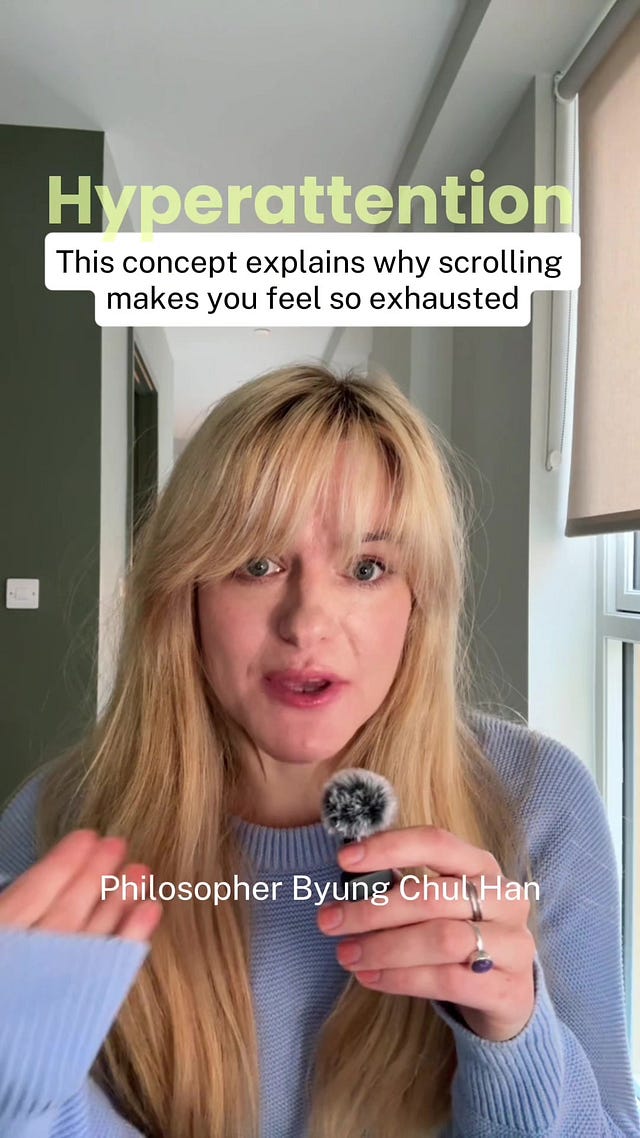
 Tiktok failed to load.
Enable 3rd party cookies or use another browser